
How to Support Bunions & Best Bunion Supports to Ease Pain
If you have developed a hard, bony lump on the inside of your foot on the big toe joint, you are probably suffering from hallux valgus, otherwise known as a bunion. For some, bunions are nothing more than a mild inconvenience that can be managed with at-home treatments. For others, bunions are debilitatingly painful, requiring surgery to correct.
At brace-yourself, we have numerous supports and splints to ease bunion pain and make the condition more manageable. We also have years of experience and expertise, so we’ve put together our top tips and recommendations for easing the discomfort caused by bunions.
Contents
What is the best thing to fix bunions?
Which bunion corrector is best?
How to know if you have a bunion
Can you straighten a bunion without surgery?
What is the best thing to fix bunions?
You can try several treatments to manage the discomfort caused by bunions. The key is finding what works for you and remaining consistent with your treatment for long-term relief.
- Hot and cold therapy. Applying an ice pack to the area can help reduce pain and swelling. It can also comfort irritated skin. Heat pads help reduce pain and stiffness by increasing circulation and blood flow to the area. A combination of hot and cold can effectively relieve bunions.
- Foot soaks. Soaking your feet in warm water with Epsom salt can help your muscles and joints relax and relieve soreness.
- Anti-inflammatories. Taking an anti-inflammatory medication like ibuprofen can help reduce the swelling from bunions.
- Supports and orthotics. Shoe inserts and supports can help relieve the pressure on the feet by supporting the arch.
- Rest. Let your feet rest and recover properly, especially if you work a job that requires you to be on your feet all day. Elevate your feet in the evening for improved relief.
Corrective splints
We have collated some of the best bunion splints to help relieve your symptoms. This collection caters to every budget with options from leading brands you can trust.
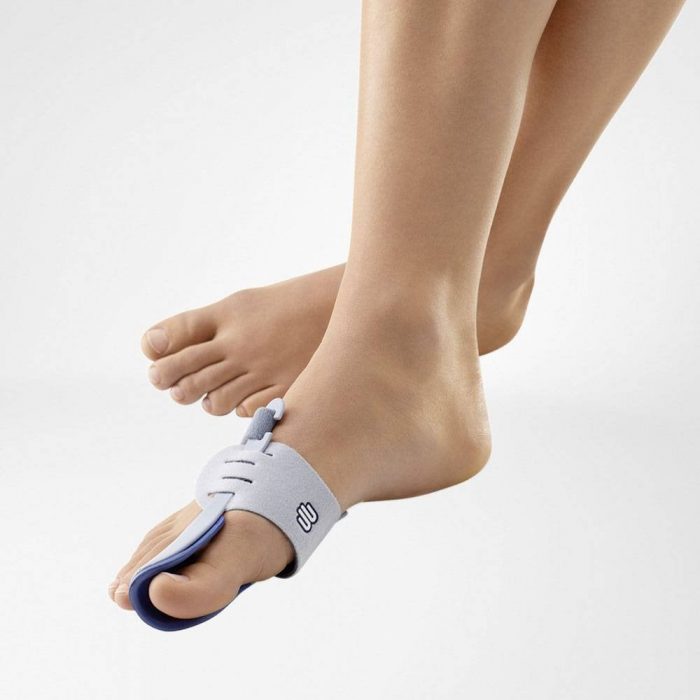
Bauerfeind Valguloc – £21.84
One of the most discreet options, the Valguloc is ideal for day-to-day wear or travelling.
- Available in three sizes and left or right options.
- Easy to set up.
- Discreet – can be worn under suitable shoes.
- Stays clear of the painful area, meaning no pressure points.
- Adjustable strap for comfort.
Bauerfeind Valguloc II – £78
The Valguloc II is the big sister to the original Valguloc model. Its added features make it a great choice for people who have had bunion surgery.
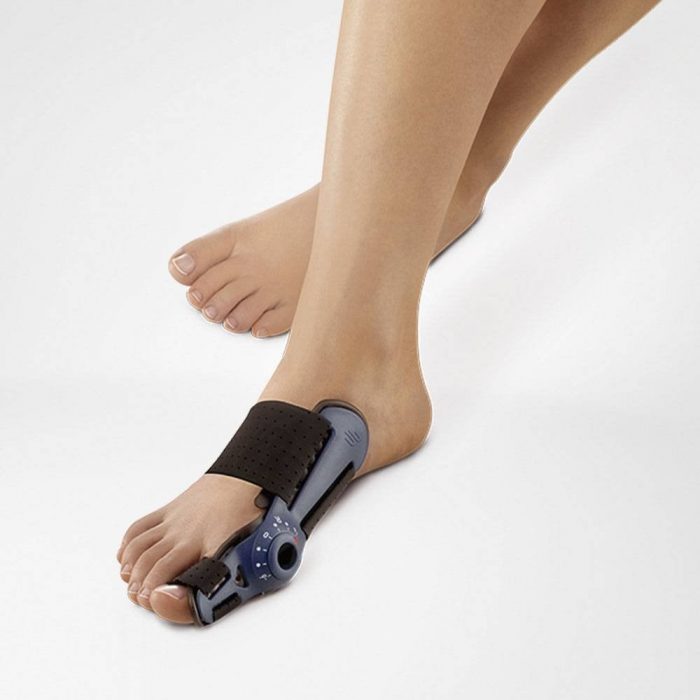
- One size fits all – easily interchanged between left and right.
- Can be worn day and night – it works while you rest.
- Three-dimensional adjustable joint.
- Relieves bunion symptoms.
- Flexion and extension can be gradually restricted.
- Anatomically contoured without pressure points.
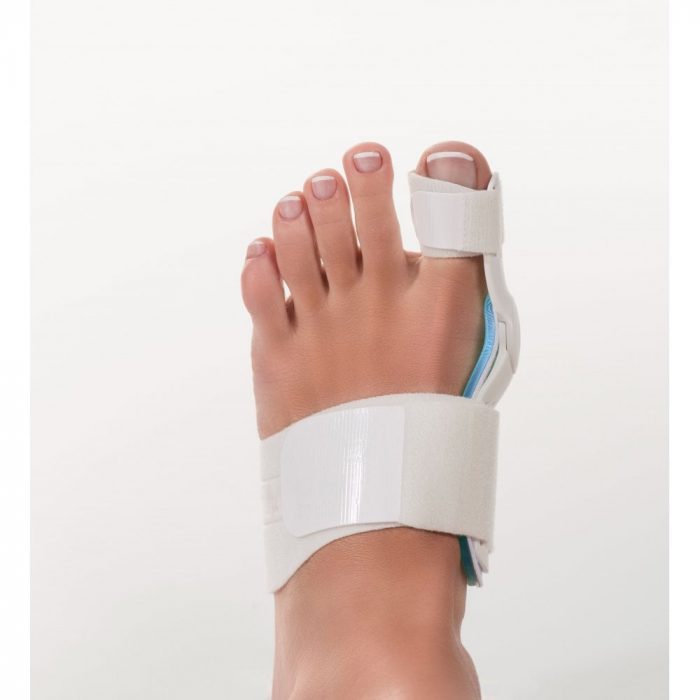
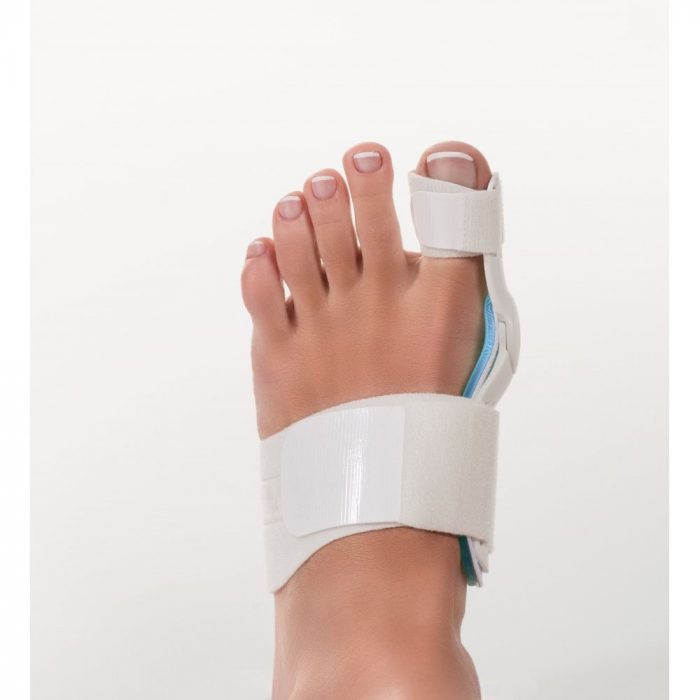
Hallufix Hallux Valgus Bunion Aid Splint – £49.95.
This splint from bunion specialists Hallufix can be used to prevent or correct big toe malpositioning.
- Three sizes are available and can be worn on either foot.
- Soft, coolable and hygienic gel pad.
- Immediate pain relief and correction.
- Developed by orthopaedic specialists.
- It can be worn in a suitable shoe.
- Metatarsal support straightens the arch of the foot.
Which bunion corrector is the best?
The best bunion corrector for you depends on your needs and how developed your bunion is. If your bunion is in the early stages of development and you want a preventative splint, the Bauerfiend Valguloc may be enough for you. If you are post-bunion surgery and need more targeted support, the Valguloc II is the better choice.
You should also take note of any other issues that may be contributing to your bunion pain. For example, flat feet are one of the most common causes of bunions, so correcting this will ultimately lead to more relief.
How to know if you have a bunion?
You may not notice any change in the earliest stages of bunion formation. In fact, many people with bunions have no pain and require no treatment. For others, bunions can be debilitating.
Common symptoms include:
- Bony lump on the inside of the big toe joint.
- Deviation of the big toe towards the other toes. Sometimes even crossing over the second toe.
- Pain, swelling and stiffness in the big toe joint.
- Inflamed, swollen skin over the bunion.
- Corns and calluses forming where the big toe rubs against the second toe.
- Limited movement in the big toe.
- Difficulty wearing shoes or finding shoes that fit comfortably.
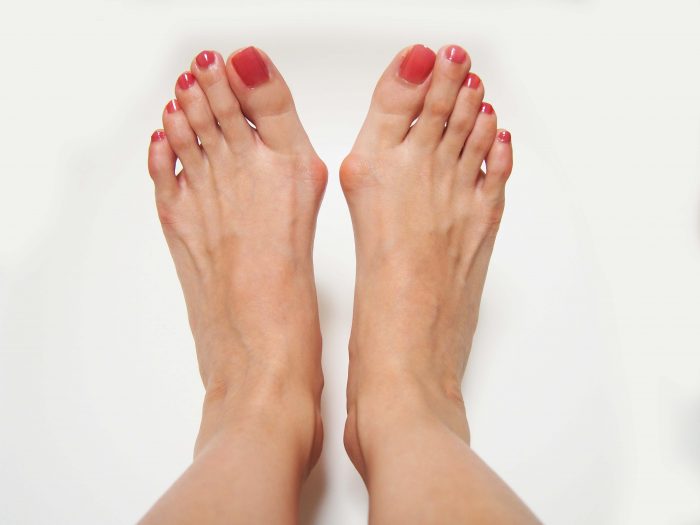
Another consideration is whether you are predisposed to bunions. While the exact cause of bunions is unknown, there are contributing factors that can make you more likely to develop them.
- If you have a family history of the condition, particularly first-degree relatives, you’re more likely to develop bunions. As many as 70% of people with bunions have a family history of hallux valgus.
- Previous injury or trauma to the toe joints.
- Hypermobility.
- Inflammatory arthritic conditions.
- Activities or jobs that put a lot of stress on the feet, like running or manual labour jobs where you’re on your feet all day.
Can you straighten a bunion without surgery?
Unfortunately, you cannot correct a bunion without surgery, and the procedure is only offered to those with severe cases who are experiencing extreme pain and disturbance in their daily life. The surgical route has a long recovery period, and there’s no guarantee that your bunion will not return, so exploring other avenues is always recommended.
Fortunately, there are many treatments, from simple foot soaks to specialised bunion splints and footwear, to make you more comfortable.
Can a bunion go away on its own?
Unfortunately, bunions will not go away on their own. Still, plenty of treatment options can provide long-term relief from the pain and discomfort caused by bunions. Hopefully, our advice has made you feel more confident in treating your bunions, whether by utilising foot soaks or investing in a specialist splint.
Always seek advice from your doctor before commencing treatment.
Read more
How to prevent bunions and ease bunion pain

Comments are closed here.