
How to Wear a Tennis Elbow Brace
Tennis elbow is, unfortunately, a common injury, most prevalent in those aged 35-54. Even the professionals aren’t immune. Andy Murray, Venus Williams, Bjorn Borg, and Juan Martin del Potro have all fallen victim to tennis elbow. Despite the name, its estimated that 90% of people who develop tennis elbow do not get it from playing tennis or other sports.
Depending on the severity of the injury, mild tennis elbow pain can be managed quite easily, while a more severe case might require a different approach. It’s important to seek professional advice if you suspect you are suffering with tennis elbow.
In this guide, we explore what causes tennis elbow and how a brace might be able to help your recovery journey, getting you back to your regular activities pain free.
Table of contents
How can you treat tennis elbow?
How does a tennis elbow brace work?
How do you wear a tennis elbow brace?
How long does tennis elbow last?

What is tennis elbow?
Tennis elbow, or lateral epicondylitis, is a condition which causes pain around the outside of the elbow and down into the forearm. It’s important not to confuse tennis and golfer’s elbow, which is the same injury but affects the inner elbow.
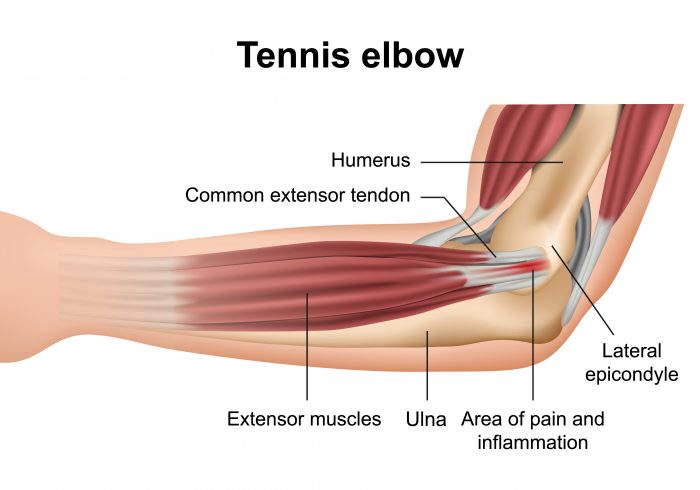
Tennis elbow can be triggered by tasks and activities that involve repeated gripping and movement of the hand, hence why it’s a common injury in racquet sports. However, many activities can cause tennis elbow.
What causes tennis elbow?
Tennis elbow is most commonly caused by repetitive strain activities. Aside from racquet sport players, tennis elbow is common in butchers, decorators, musicians, dentists, carpenters, gardeners and mechanics.
Tennis elbow symptoms
The symptoms of tennis elbow can range from mild discomfort to severe, debilitating pain. The main symptoms are:

- Pain and tenderness on the outside of the elbow.
- Pain that radiates down the forearm to the wrist and hand.
- A burning sensation on the outer elbow that can radiate up or down the arm.
- Swelling.
- Pain when bending or lifting the arm, gripping objects, twisting the forearm or extending the arm.
- Weakened grip.
How can you treat tennis elbow?
The first step in treating tennis elbow is stopping the activity causing the injury and resting. It’s also important to reduce the inflammation to reduce discomfort. This can be done with ice packs, anti-inflammatory medicines like ibuprofen, or your doctor may prescribe a stronger variant like naproxen. If symptoms persist, you may decide to brace the area, but always seek guidance from a medical professional before exploring this avenue.
How does a tennis elbow brace work?
A tennis elbow brace diverts stress pressure away from the area to reduce discomfort. Tennis elbow primarily affects the tendon of the muscles that extend to the wrist, called the ECRB muscle. When this muscle contracts, it pulls on both the elbow and the wrist. By applying a counter force with a brace, the pressure on the tendon’s origin, in this case, the ECRB muscle, is decreased, thus reducing pain.
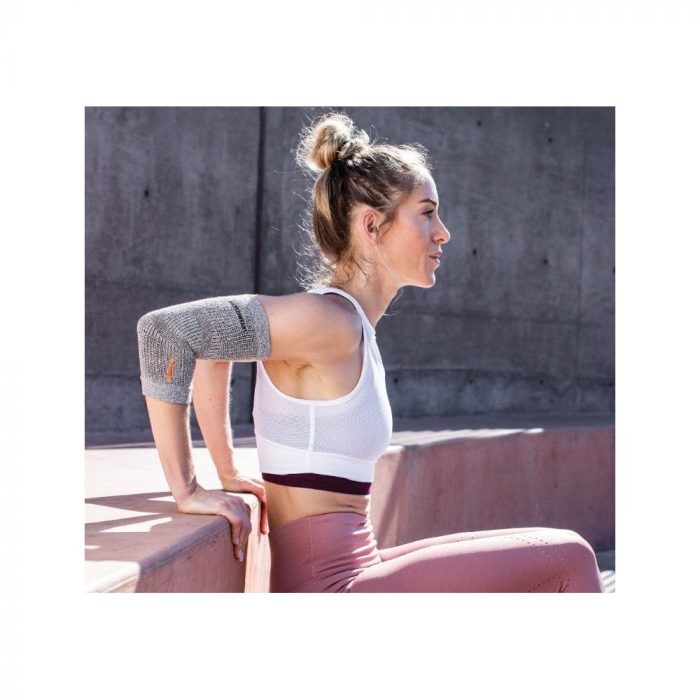
At brace-yourself, we offer innovative tennis elbow support from leading experts in sports and medical support. Incrediwear elbow supports are made with technical fabrics that include natural semiconductor elements, releasing negative ions into the body to promote blood flow to the affected area. The increase in oxygen and nutrients to the painful tendon and muscle promotes healing and pain relief during activity and while at rest.
How do you wear a tennis elbow brace?
It’s important to fit a tennis elbow brace correctly in order to get the best relief. It will depend on the type of brace you choose, but as a general guide, here is how to fit your tennis elbow brace properly.
- Choose a brace from our tennis elbow support collection.
- Place the brace just below the sore spot, leaving between a thumb and two fingers width space.
- Adjust the position of the brace until you find the most comfortable position that reduces the pain.
- If the brace has a strap, tighten it until it feels snug but not too tight or restrictive.
- Get on with your usual activities and see if the brace is reducing the pain. If not, adjust the position and try again until you get the positioning correct.
It’s important to note that a tennis elbow brace may not help in all cases. If a brace doesn’t provide relief, seek advice from a healthcare professional.
How long does tennis elbow last?
Depending on the severity, tennis elbow can last anywhere from a few months to over a year. It tends to take around six months to recover, but it depends on how soon you start treating your symptoms when they first appear.
The good news is that most cases of tennis elbow will get better on their own with the right treatment. More severe or persistent cases may require physiotherapy, ultrasound therapy, where high-frequency sound waves are used to increase blood flow, or surgery in very severe cases.

Leading medical and sports supports at brace-yourself
From tennis elbow to injury support, surgery recovery and compression sleeves, brace-yourself has an extensive collection of medical and sports supports for a range of common injuries and conditions. Our products are supplied by leading experts like Bauerfeind, Incrediwear, Hallufix and many more.
Do you need advice on a certain product or want to find the right support for you? Ask a clinician by emailing askaclincian@brace-yourself.co.uk.
Read next
How do compression sleeves work?
All about Incrediwear: Pioneers in sports and recovery supports

Comments are closed here.