
Common Rugby Injuries and How to Treat Them
Rugby is one of the most physically demanding sports in the world. Between the tackling, scrummaging, rucking, and rapid changes of direction, players put their bodies through an extraordinary amount of stress every time they step onto the pitch. It is no surprise, then, that approximately one in four rugby players will pick up an injury during a season.
Whether you play at grassroots level on a Sunday morning or compete in a professional setup, understanding the most common injuries and how to treat them can help you recover faster and stay in the game longer. In this guide, we run through the injuries that rugby players encounter most often, explain how to treat them, and look at how the right support can help with both recovery and prevention.
Contents
- Why are rugby injuries so common?
- Ankle sprains
- Knee ligament injuries
- Hamstring strains
- Shoulder dislocations and instability
- Concussion
- Muscle contusions (dead legs)
- Calf and Achilles tendon injuries
- Lower back injuries
- How to reduce your risk of rugby injuries
- When to see a doctor
Why are rugby injuries so common?
Rugby has one of the highest injury rates of any team sport. Research published in the British Journal of Sports Medicine estimates the overall injury rate in professional rugby union at around 80 to 90 injuries per 1,000 player hours. That is roughly three times higher than football.
Several factors make rugby players particularly vulnerable. First, 35% of all match injuries happen during the tackle, making it the single most dangerous phase of play. Contact injuries account for around 58% of all match injuries in professional rugby. On top of that, more injuries occur in the second half of matches, when fatigue sets in and technique starts to slip. Forwards tend to pick up more musculoskeletal injuries due to the physical demands of scrums and rucks, while backs are more prone to hamstring strains and ligament injuries because of the speed and agility their positions require.
Understanding which injuries are most likely to occur is the first step towards preventing them. So let’s look at the most common ones.
Ankle sprains
Ankle sprains are one of the most frequent rugby injuries, representing almost 1 in 7 of all rugby injuries. They happen when the ligaments supporting the ankle are stretched or torn, usually as a result of the foot rolling inward during a tackle, ruck, or sudden change of direction.
What does it feel like?
You will usually feel a sharp pain on the outside of the ankle, followed by swelling and bruising. Putting weight on the foot may be difficult or painful. In more severe sprains, you might hear or feel a popping sensation at the time of injury.
How to treat it
For mild to moderate sprains, follow the PRICE protocol in the first 48 to 72 hours: Protect the ankle from further injury, Rest it, apply Ice for 15 to 20 minutes every 2 to 3 hours, use Compression to control swelling, and Elevate the foot above heart level when possible. After the initial swelling subsides, gentle range-of-motion exercises and progressive strengthening are important for a full recovery. A physiotherapist can guide you through a rehabilitation programme tailored to your needs.
How bracing can help
An ankle support can play a valuable role both during recovery and when returning to play. The Bauerfeind Sports Ankle Support Dynamic provides targeted stabilisation while remaining lightweight enough for match play. For recovery and everyday support, the Incrediwear Ankle Sleeve uses semiconductor technology to boost circulation and reduce inflammation around the joint, helping you heal faster.
Knee ligament injuries
The knee takes a tremendous amount of punishment in rugby. Ligament injuries, particularly to the medial collateral ligament (MCL) and the anterior cruciate ligament (ACL), are among the most common and most serious injuries in the sport. They typically occur during tackles, awkward landings, or when the foot is planted and the knee twists under force.
What does it feel like?
MCL injuries usually cause pain and tenderness on the inside of the knee, along with swelling and a feeling of looseness in the joint. ACL injuries are often more dramatic. Many players report hearing a “pop” followed by significant swelling, instability, and difficulty bearing weight. ACL tears frequently require surgical reconstruction and a rehabilitation period of 9 to 12 months.
How to treat it
For minor MCL sprains, rest, ice, compression, and a gradual return to activity under physiotherapy guidance is usually sufficient. More severe MCL injuries and most ACL tears require specialist assessment. An orthopaedic surgeon will discuss your options, which may include surgery followed by an extended rehabilitation programme.
How bracing can help
During recovery, a hinged knee brace provides stability and helps protect the healing ligament. The Bauerfeind GenuTrain S Pro features anatomically shaped lateral splints that guide the knee joint and can limit range of motion as needed. For lighter support during return to play, the Bauerfeind Sports Knee Support offers medical-grade compression with an anatomically contoured kneecap pad, improving joint coordination and protecting against reinjury.
Hamstring strains
Hamstring injuries are extremely common in rugby, particularly among backs who rely on sprinting, acceleration, and sudden deceleration. The RFU’s injury surveillance data consistently places hamstring injuries among the top match injuries in professional rugby, second only to concussion. They occur when the muscles at the back of the thigh are stretched beyond their capacity, often during sprinting or kicking.
What does it feel like?
A sudden, sharp pain at the back of the thigh is the classic sign. You may also feel a tearing or popping sensation. Swelling and bruising often follow within hours, and bending the knee or walking may become painful. Hamstring strains range from mild (grade 1) to complete tears (grade 3), with recovery times varying from a couple of weeks to several months.
How to treat it
In the first 48 hours, rest the leg, apply ice regularly, use compression, and keep the leg elevated where possible. After the initial phase, gentle stretching and progressive strengthening exercises are essential. Rushing back too soon is one of the biggest mistakes rugby players make with hamstring injuries, as reinjury rates are high. Working with a physiotherapist to build a structured return-to-play programme is strongly recommended.
How bracing can help
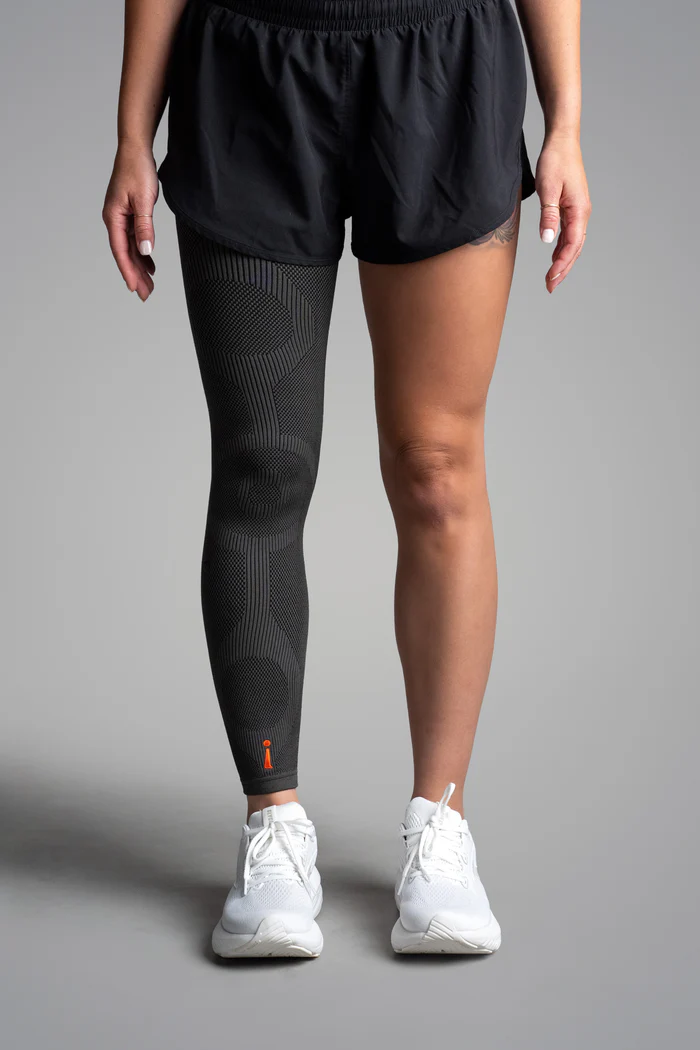
The Incrediwear Leg Sleeve is designed to increase circulation and reduce inflammation in the upper and lower leg. Wearing it during recovery can help speed up the healing process and provide comfortable support without restricting movement. For targeted thigh compression during return to training, the Bauerfeind Sports Compression Upper Leg Sleeve helps reduce muscle vibration and supports blood flow during activity.
Shoulder dislocations and instability
The shoulder is one of the most vulnerable joints in rugby. Dislocations and subluxations (partial dislocations) commonly occur during tackles, falls, and collisions. The shoulder joint has an enormous range of motion, but that flexibility comes at the cost of stability. A hard impact can force the head of the upper arm bone out of the socket, causing significant pain and damage to the surrounding ligaments and tendons.
What does it feel like?
A dislocated shoulder is usually obvious. The arm looks visibly out of place, and any movement causes intense pain. You may also feel numbness or tingling down the arm. Even after the joint is put back into place (reduced), the shoulder often feels loose and unstable, especially if the surrounding structures have been damaged.
How to treat it
A dislocated shoulder needs to be reduced by a medical professional. Do not attempt to put it back yourself. After reduction, the arm is typically immobilised in a sling for a period of time. Physiotherapy is then essential to rebuild strength, stability, and range of motion. Repeated dislocations may eventually require surgical stabilisation.
How bracing can help
During recovery, the Incrediwear Shoulder Brace helps by increasing blood flow to the area and reducing inflammation, while still allowing comfortable, extended wear. For post-injury immobilisation, your medical team may recommend a specific sling from our slings range.
Concussion
Concussion is the single most common match injury in professional rugby in England, with an incidence rate of around 22 per 1,000 player hours according to the RFU. It is a traumatic brain injury caused by a blow or jolt to the head, and it should always be taken seriously. While most concussions resolve within 7 to 10 days, some can lead to prolonged symptoms and, in rare cases, long-term complications.
What does it feel like?
Symptoms can vary widely. Common signs include headache, dizziness, confusion, memory problems, nausea, sensitivity to light or noise, and feeling “foggy.” You do not need to lose consciousness to have a concussion. In fact, most concussions do not involve a loss of consciousness.
How to treat it
If concussion is suspected, the player must be removed from the field immediately. The World Rugby concussion protocols require a graduated return-to-play process that takes a minimum of one week. Rest, both physical and cognitive, is the priority in the early stages. Players should not return to contact training or match play until they have been cleared by a medical professional and have completed the full return-to-play protocol without symptoms.
Prevention
While bracing cannot prevent concussion, wearing a properly fitted mouthguard and practising correct tackle technique are the best preventive measures. If you or a teammate shows any signs of concussion, always err on the side of caution. The old mentality of “playing through it” can have serious consequences.
Muscle contusions (dead legs)
The classic “dead leg” is one of rugby’s most common injuries. It occurs when a direct blow to the thigh causes bruising deep in the muscle tissue (typically the quadriceps). While often dismissed as a minor knock, severe contusions can sideline players for weeks and, if not treated properly, can lead to complications like myositis ossificans, where bone forms within the damaged muscle tissue.
What does it feel like?
Immediate pain and stiffness in the thigh, followed by swelling and bruising. Bending the knee fully may be difficult. In severe cases, the thigh can swell significantly and become very tender to touch.
How to treat it
Apply ice immediately and compress the area. In the first 24 to 48 hours, keep the knee gently bent to maintain muscle length and prevent the quadriceps from tightening up. Avoid aggressive stretching or massage in the early stages, as this can make the injury worse. Gentle, progressive rehabilitation under the guidance of a physiotherapist is the safest approach.
How bracing can help
The Incrediwear Leg Sleeve can help manage swelling and boost circulation to the area during recovery. Its semiconductor fabric works without heavy compression, making it comfortable to wear even over a bruised and tender thigh.
Calf and Achilles tendon injuries
Calf strains and Achilles tendon problems are increasingly common in rugby, particularly among older players and those carrying heavy training loads. The calf muscles and Achilles tendon work hard during sprinting, jumping, and pushing in scrums. Sudden acceleration or a rapid change of direction can overload these structures and cause a strain or, in more severe cases, a partial or complete rupture.
What does it feel like?
A calf strain feels like a sudden tightness or sharp pain in the back of the lower leg. An Achilles tendon injury may feel like being kicked in the back of the heel. Swelling and difficulty walking, particularly pushing off from the toes, are common signs. A complete Achilles rupture is a serious injury that usually requires surgical repair.
How to treat it
For calf strains, rest, ice, and compression in the first 48 hours, followed by a graduated strengthening programme. For Achilles tendon issues, seek professional assessment early. Chronic Achilles problems respond well to eccentric loading exercises (heel drops), but a complete rupture needs urgent medical attention.
How bracing can help
The Bauerfeind Sports Achilles Support provides targeted support to the Achilles tendon during training and competition. For recovery from calf strains, the Incrediwear Calf Sleeve helps increase blood flow and reduce inflammation, supporting the healing process.

Lower back injuries
The scrum places enormous compressive forces on the spine, and lower back injuries are common among forwards in particular. Problems range from muscle strains and facet joint irritation to disc bulges and, in rare cases, stress fractures. Backs are not immune either, as the repeated impacts of tackling and being tackled can take a cumulative toll on the lumbar spine.
What does it feel like?
Lower back pain can present in many ways. Muscle strains cause localised aching and stiffness that worsens with movement. Disc problems may produce sharp pain that radiates into the buttock or down the leg. Facet joint injuries often cause pain that is worse when leaning backward or twisting.
How to treat it
For acute muscle strains, gentle movement is usually better than complete rest. Over-the-counter pain relief, ice or heat (whichever feels better), and gentle stretching can help manage symptoms in the short term. If pain persists beyond a couple of weeks, or if you experience numbness, tingling, or weakness in the legs, see a medical professional promptly. Core strengthening exercises are the cornerstone of long-term back health for rugby players.
How bracing can help
The Bauerfeind LumboTrain back support provides active stabilisation and pain reduction for the lumbar spine. It uses a viscoelastic pad to massage the muscles either side of the spine during movement, helping to relieve tension and improve proprioception.
How to reduce your risk of rugby injuries
While you can never eliminate injury risk entirely in a contact sport like rugby, you can take steps to reduce it significantly:
Warm up properly. A thorough warm-up that includes dynamic stretching, activation exercises, and sport-specific drills prepares your muscles and joints for the demands ahead. Research consistently shows that structured warm-up programmes reduce injury rates.
Build strength and conditioning. A well-designed strength programme targeting the legs, core, shoulders, and neck can make your body more resilient to the forces involved in rugby. Focus on compound movements like squats, deadlifts, and press-ups, alongside sport-specific exercises.
Work on your technique. Poor tackle technique is a major risk factor for injury. Coaching that emphasises correct body position, head placement, and timing in the tackle can significantly reduce injury risk for both the tackler and the ball carrier.
Don’t skip pre-season. Injury rates are highest at the start of the season, which suggests that inadequate pre-season conditioning plays a role. Build your fitness gradually in the weeks before the season starts rather than going straight from the sofa to match day.
Wear the right support. If you have a history of ankle, knee, or shoulder injuries, wearing a brace or support during training and matches can provide additional protection and confidence. Browse our full sports supports range to find the right option for your needs.
Recover properly. Allow adequate time between training sessions and matches for your body to recover. Compression sleeves, foam rolling, adequate sleep, and good nutrition all contribute to faster recovery and lower injury risk. Our fitness and rehabilitation range includes foam rollers, resistance bands, and other recovery tools.
Listen to your body. Playing through pain is part of rugby culture, but ignoring a genuine injury almost always makes things worse. If something does not feel right, get it assessed early rather than waiting until the damage becomes more severe.
When to see a doctor
Some rugby injuries need professional assessment. See a doctor or go to A&E if:
- You suspect a concussion or head injury
- A joint appears deformed, dislocated, or will not bear weight
- You hear a pop or snap from a joint or muscle during play
- Swelling is severe or increasing rapidly
- You experience numbness, tingling, or weakness in a limb
- Pain does not improve with rest and basic treatment after a few days
- You have any neck or spinal pain following a collision
Getting the right diagnosis early gives you the best chance of a full recovery and a safe return to the pitch.
This guide is for informational purposes only and should not replace professional medical advice, diagnosis, or treatment. If you have sustained a rugby injury, please consult with your GP, a physiotherapist, or a sports medicine professional.
Need help choosing the right support for rugby? Our team at Brace Yourself is here to help. Call us on 0800 368 8964 or browse our full range of sports supports and performance and recovery products.

Comments are closed here.