
Common Golf Injuries & How to Treat Them
Golf is often seen as a low-impact sport, but the truth is that the repetitive, rotational force of the golf swing places significant stress on the body. This continuous rotation, especially without a proper warm-up, makes golf injuries incredibly common, particularly among recreational players over 40.
Understanding these injuries and knowing when and how to seek treatment is key to keeping you on the course. Here is an overview of the most common golf-related issues and how to manage them.
Table of Contents

TL;DR Summary
Golf, while low-impact, causes common overuse injuries due to the repetitive, rotational stress of the swing, primarily affecting the back, shoulders, elbows, and wrists. Immediate management often involves R.I.C.E. (Rest, Ice, Compression, Elevation), but long-term healing requires physiotherapy, core strengthening, and improved swing mechanics. Using specific supports, such as elbow straps and wrist splints, can effectively offload tendons and stabilise joints during recovery and return to play.
Key Takeaway Points
- Rotational Stress is the Root Cause: Most common golf injuries (back pain, rotator cuff tears, elbow tendonitis) stem from the high-force, one-sided rotational movement of the swing, often exacerbated by poor core strength and technique.
- Specific Bracing is a Key Treatment Tool: Effective management of elbow injuries (Golfer’s/Tennis Elbow) requires a counterforce strap to offload tendons, while a quality wrist splint or back support provides the stability and compression needed for a safe return to the course.
- Prevention is Foundational: The best defence against golf injuries is a consistent routine involving a dynamic warm-up, regular strength and conditioning (especially core), and professional instruction to ensure biomechanically sound swing mechanics.
The Most Common Golf Injuries
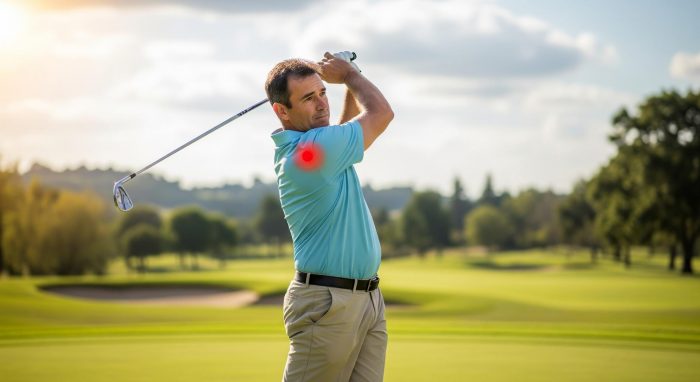
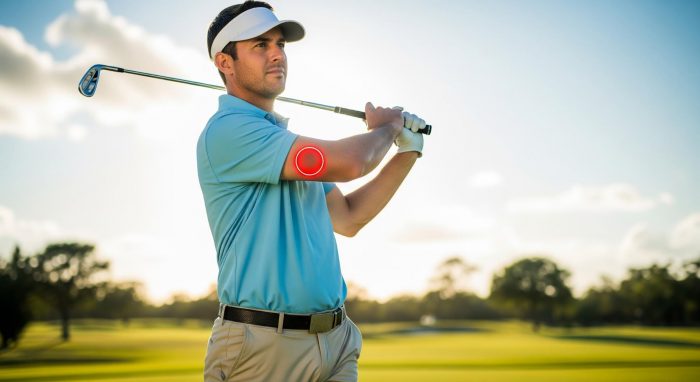
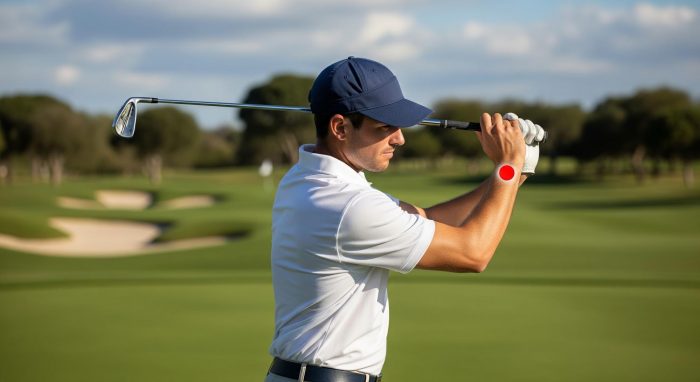
The golf swing relies on a powerful, one-sided rotational movement, which concentrates strain in four main areas: the back, shoulders, elbows, and wrists.

Common Back Injuries from Golf
The forceful twist during the backswing and downswing makes the lower back (lumbar spine) the most vulnerable area for golfers. These injuries often stem from core muscle weakness and modern swing techniques that emphasise keeping the hips static to generate more power, increasing rotational stress on the spine.
Common back injuries include:
- Muscle Strain or Ligament Sprain: The most common issue, causing pain, inflammation, and muscle spasms.
- Disc Injuries: Repeated rotation can exacerbate preexisting conditions such as disc degeneration or lead to herniated or ruptured discs.
- Stress Fractures: Rare, but possible due to repeated rotational strain, leading to dull pain and instability.
How to manage back golf injuries
For back injuries (strains and disc issues), immediate management involves resting, applying ice to reduce inflammation, and using gentle heat after 48 hours to relax muscles. However, the true long-term solution lies in Physiotherapy, which must focus on strengthening the core and improving hip and upper back mobility. Products like a breathable back support provide essential compression and stability during movement.
Common Shoulder Injuries from Golf
The shoulder is a complex joint that takes the brunt of the swing’s effort. Overuse and poor mechanics can lead to conditions that cause pain, weakness, and inflammation.
- Rotator Cuff Tears or Impingement: The rotator cuff tendons stabilise the shoulder. Repetitive motion can cause these tendons to become inflamed (impingement) or even tear.
- SLAP Tears: An injury to the ring of cartilage (labrum) surrounding the shoulder socket, often caused by the high rotational force of the swing.
How to manage shoulder golf injuries
For shoulder injuries (rotator cuff issues), rest, ice, and anti-inflammatories are the initial steps, often requiring a short period of immobilisation with a sling or brace. Rehabilitation is paramount, focusing on specific exercises to restore the range of motion and strengthen the stabilising rotator cuff muscles. Using a quality shoulder support from our Shoulder & Elbow range offers compression and proprioceptive feedback, which is key for stability during the slow return to the golf swing.

Common Elbow Injuries from Golf
Golf is unique in that it is associated with two opposing forms of tendonitis in the elbow:
- Golfer’s Elbow (Medial Epicondylitis): Pain on the inside of the elbow. This occurs due to repeated stress on the tendons that connect to the inside bony bump of your elbow, often from gripping the club too tightly or striking the ground.
- Tennis Elbow (Lateral Epicondylitis): Pain on the outside of the elbow. This is also common among golfers and is due to overuse of the forearm muscles that control the wrist.
How to manage elbow golf injuries

When managing elbow injuries (Golfer’s or Tennis Elbow), the goal is to offload the irritated tendons. This requires resting the arm from repetitive gripping and applying ice. Still, the most effective product solution is a counterforce brace or strap, such as the Bauerfeind Sports Elbow Support, worn just below the elbow to absorb the tension on the tendon attachment points. This must be paired with specific forearm stretching and strengthening exercises to heal the tendon and prevent recurrence.
Common Wrist and Hand Injuries from Golf
The wrists are particularly susceptible to injury at the point of impact, especially if the club hits something solid like a tree root or hard bunker sand.
- Wrist Sprain/Tendonitis: Caused by sudden resistance (sprain) or chronic overuse (tendonitis), resulting in swelling and pain.
- Golfer’s Thumb: This term often refers to a sprain of the ulnar collateral ligament (UCL) in the thumb, which is crucial for a stable grip.
How to manage wrist and hand golf injuries
Wrist and hand injuries (sprains and tendonitis) demand immediate rest and possible splinting to protect vulnerable ligaments, like the UCL in Golfer’s Thumb. Once the pain permits, rehabilitation involves exercises to improve grip strength and stabilise the wrist. Wearing a lightweight yet supportive wrist strap during practice can provide the stability needed to reduce joint strain and ensure a safe, controlled return to your game.

Key FAQs about Golf Injuries
When an injury occurs, golfers typically have three major questions regarding rules, healing, and playability.
Are wrist supports legal in golf?
Yes, generally they are, provided they are for a medical condition and do not provide an undue performance advantage.
According to the Rules of Golf (governed by the USGA and The R&A), a player must not use any artificial device or unusual equipment that might assist in making a stroke. However, there is an important exception: A player is not in breach of the rule if the equipment is designed for, or has the effect of, alleviating a medical condition, and the player has a legitimate medical reason to use the equipment.
If you are using a wrist support or brace to manage an existing injury (like tendonitis or a sprain), you should be cleared to play. If in doubt about a specific device, it’s always best to consult the club’s committee.
Can I play golf with a rotator cuff injury?
It depends entirely on the severity of the injury and your doctor’s advice.
- Strains, Bursitis, or Partial Tears: You may be able to continue playing with modifications. This often involves shortening your backswing, slowing your swing speed, and taking anti-inflammatory medication before a round. Physical therapy to strengthen the muscles is essential.
- Complete Tears or Severe Impingement: Activity usually needs to be halted immediately. Rest and physical therapy are the first steps. In some cases, surgery is required, after which a specialist monitors a gradual return to play. Ignoring a serious tear can lead to permanent damage.
How long does Golfer’s Thumb take to heal?
Healing time for golfer’s thumb (UCL sprain) varies based on the grade of the sprain:
- Mild Sprain (Grade I): Typically heals within 2 to 4 weeks with proper rest, taping, and ice.
- Moderate Sprain (Grade II): May require immobilisation with a splint or brace and can take 4 to 6 weeks to heal before returning to a full grip.
- Severe Tear (Grade III): Often requires surgical repair and extensive rehabilitation, which can take several months to regain the full function and strength necessary for a proper golf swing.
How To Prevent Golf Injuries
Prevention is always better than a cure. Focus on these three areas to build resilience:
- Warm-Up & Cool-Down: Dedicate 10 minutes before your round to gentle dynamic stretches, focusing on the back, shoulders, and wrists. Post-round, use static stretches to improve flexibility.
- Focus on Form: Incorrect swing mechanics are the root cause of many overuse injuries. Investing in a lesson to ensure your swing minimises strain on your lower back and joints is one of the best preventative measures you can take.
- Strength and Conditioning: A strong core and glutes are the engines of the golf swing. By strengthening these areas, you reduce the strain transferred to the smaller, more vulnerable joints (shoulders, elbows, and wrists).
Enhancing Recovery and Prevention
To aid in muscle recovery and reduce inflammation, many athletes turn to supportive garments and specialised recovery products. Consider incorporating products from brands like Incrediwear, which are known for using germanium- and carbon-embedded fabric to stimulate circulation, speed healing, and reduce fatigue.
Related Posts
Common Cycling Injuries & How to Treat Them

Comments are closed here.