
What is Jumper’s Knee & How To Treat It?
Whether you’re a long jumper, high jumper, or someone who does a lot of high-impact activities, you might be familiar with patellar tendinopathy, otherwise known as jumper’s knee. Frustrating but common, jumper’s knee causes pain and inflammation that can stop you in your tracks. In this brace-yourself guide, we answer your questions about jumper’s knee and how to treat it, so you know what steps to take to get back to your usual self.
Contents
How long does it take to recover from jumper’s knee?
Is jumper’s knee the same as runner’s knee?

What is jumper’s knee?
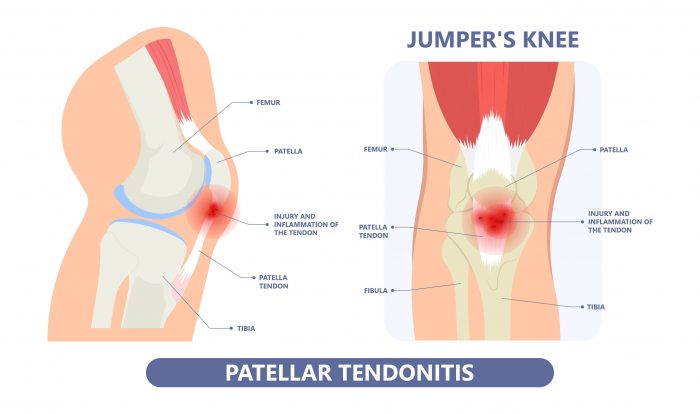
Patellar tendinopathy, commonly known as jumper’s knee, is a condition characterised by inflammation of the patellar tendon, which connects the patellar (kneecap) to the tibia (shinbone). Jumper’s knee weakens this tendon, and can lead to tears and permanent damage if left untreated.
How do you get jumper’s knee?
Jumper’s knee is usually an overuse injury caused by frequent jumping and landing, and high-impact activities. While most cases are linked to sports, it can also occur through repeated overloading of the knee and too much repetitive activity.
Repeated stress and impact mean the tendon can’t repair itself quickly enough, leading to weakness, tears, and further damage.
Some factors can increase your risk of developing jumper’s knee:
- Age – patellar tendinopathy is more likely to develop in your teens and 20s, but you can get it when you’re older, too.
- Muscle weakness – jumper’s knee is more likely to occur if your thigh muscles aren’t strong enough to support the patellar tendon.
- Hill running, especially downhill running, can agitate the tendon.
- Overtraining.
- Poor technique.
- Playing sports on hard surfaces.
- Having flat feet or low arches can increase the risk of jumper’s knee by altering lower limb biomechanics, leading to uneven stress on the patellar tendon when jumping and landing.
Jumper’s knee symptoms
The main symptom of jumper’s knee is pain or aching at the front of the knee, just below the kneecap. The pain tends to increase gradually, rather than coming on acutely like a sudden injury. When the pain starts, it may only come on when you start exercising and dissipate after your warm-up. You may then start experiencing pain after activity, and eventually during exercise too.
Other symptoms include:
- Knee tender to the touch.
- Pain when bending or straightening the leg.
- Pain when walking, running and jumping.
- Pain and soreness under the kneecap.
- Tenderness behind the lower kneecap.
- Swelling.
How to diagnose jumper’s knee
Jumper’s knee is diagnosed through physical examination by a medical professional. They will review your symptoms, physically assess your knee’s range of motion, muscle strength, and flexibility. You may be asked to complete some functional tests, including squatting or hopping.
Diagnosis is usually based on the physical exam. Imaging tests like an MRI, ultrasound or X-ray may be conducted to rule out other causes or assess tendon damage if it’s deemed necessary.
How long does it take to recover from jumper’s knee?
Like many conditions, the recovery time for jumper’s knee depends on the severity of damage to the tendon. It’s best to seek treatment as soon as you start feeling pain.
Once correct treatment has begun, jumper’s knee tends to take around 2-3 months to heal and strengthen. If it hasn’t fully healed after this period, it should be ready for higher-impact activity again.
For milder cases, some low-impact activity can be continued while the tendon is being treated, but it’s essential to seek guidance from a medical professional before engaging in any activity during treatment.
More severe cases may require 6 to 9 months of treatment to achieve a full recovery. It’s always best to seek treatment as soon as you start feeling pain. Don’t try and work through it – you’ll just make it worse!
How to avoid jumper’s knee
Jumper’s knee is a common condition, but there are precautions you can take to prevent it from occurring.
Warm up properly
Warming up before activity is crucial for avoiding injuries. Walk for 5-10 minutes and do dynamic stretches to prepare the body for a workout, especially before any running or jumping. Pay extra attention to the quadriceps and hamstrings.
Strengthen and stretch thigh muscles
Tight, weak thigh muscles can increase the risk of jumper’s knee. The quadriceps connect to the patellar tendon, so keeping it strong will help reduce the risk of injury.
Increase exercise gradually
Upping the intensity of your activity too quickly can put you at higher risk of many injuries, including jumper’s knee. Always progress gradually, even if you feel strong.
Listen to your body
Pain is information. If you begin feeling pain, don’t ignore it; this can lead to further damage. Scale back your activity and seek guidance from a professional. Prevention is better than cure!
Is jumper’s knee the same as runner’s knee?
The short answer is no. While jumper’s knee can sometimes be mistaken for runner’s knee, they are different conditions that require different treatment approaches.
Looking at the symptoms of each condition helps to highlight the distinct differences between the two.
Runner’s knee pain is usually around or behind the kneecap. It may present as a dull ache or sharp pain that worsens with activities such as running or squatting. It can also feel tender around the knee joint, especially in the patella area.
On the other hand, jumper’s knee pain is more localised to the patellar tendon, with discomfort typically felt just below the kneecap. The pain is triggered by jumping or squatting, or when the tendon is under stress.
Seeking a professional diagnosis is important when dealing with any kind of knee injury, so you can seek the appropriate treatment for your symptoms. Incorrect treatment can lead to your condition worsening, so always get a proper diagnosis before beginning treatment to ensure it’s the right plan for your symptoms.
For further guidance on runner’s knee, check out our guide:
How to treat jumper’s knee
Treatment for jumper’s knee varies depending on the severity of the damage.
Changing activities
Depending on the severity of your pain, simply reducing the load on the tendon for a period may be enough. This might mean avoiding sports that involve jumping, hopping, or sprinting. With more conservative treatment, you might be able to stay active with low-impact exercise like swimming or cycling.
Strengthening exercises
Most jumper’s knee treatment plans will include strengthening exercises for the patellar tendon. The thigh muscles will also need to be strengthened to protect the tendon in future. Exercises will generally start at a low weight, increasing very gradually as the tendon heals. It’s important to listen to your body and pay attention to your pain to guide your progression.
Wearing supports
Using a knee brace or leg support for patellar tendonitis can help manage pain and support the knee during recovery and beyond.
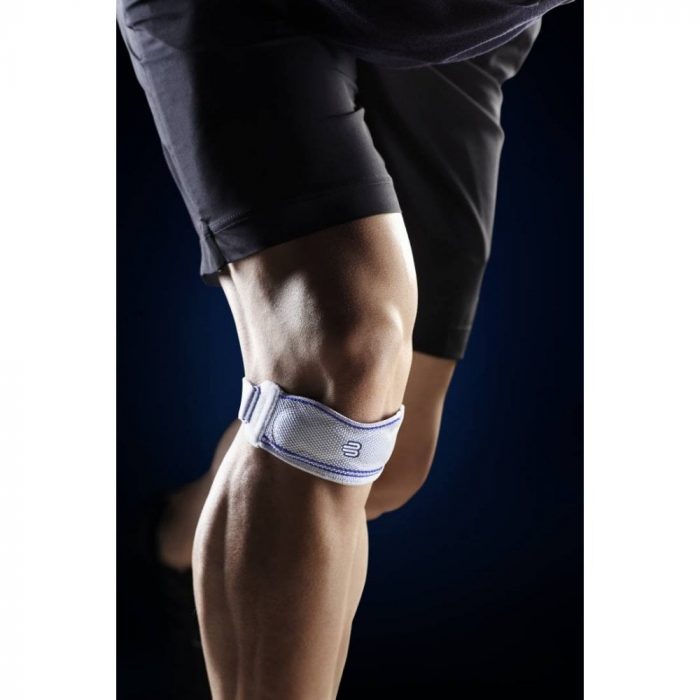
Bauerfeind GenuPoint Patellar Support
Bauerfeind’s patellar tendon support provides targeted relief to the tendon. Sitting directly below the kneecap, it exerts pressure on the patellar tendon to relieve the strain and support it through activity. The knitted fabric is non-elastic in the transverse direction and elastic in the longitudinal direction, which enables it to hold the knee securely in position through your natural movements.
Another option to explore is using arch support insoles to improve shock absorption and evenly distribute stress through the joints. This type of support can help reduce further injury to the knees, as well as the ankles and hips.
Get knee pain under control with brace-yourself
At brace-yourself, our extensive range of knee braces and supports can help you in your recovering from various knee injuries and conditions. Whether jumper’s knee has brought you to a standstill or another common knee injury is holding you back, we’re here to help you get back on your feet.

Comments are closed here.