
A Complete Guide to Knee Injuries
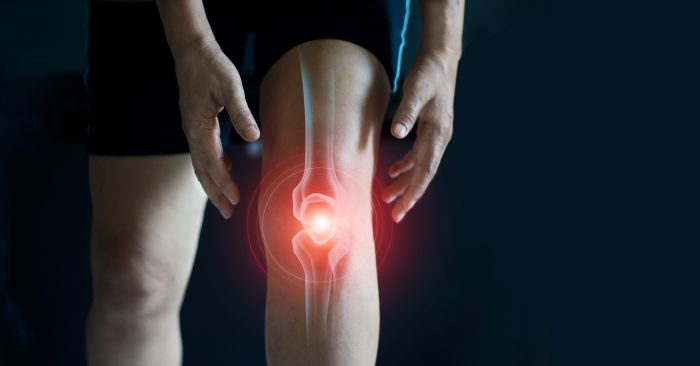
Whatever the cause, knee pain can be debilitating, affecting your daily life. Whether you’ve picked up an injury or been diagnosed with a health condition, feeling like your regular activities have been disrupted can be tough.
While we always advise seeking advice from a medical professional, this guide aims to help you understand what might be causing discomfort. It covers a range of common injuries and ailments and their symptoms.
Contents
What can cause knee pain without injury?
How do I know what type of knee injury I have?
How do knees work?
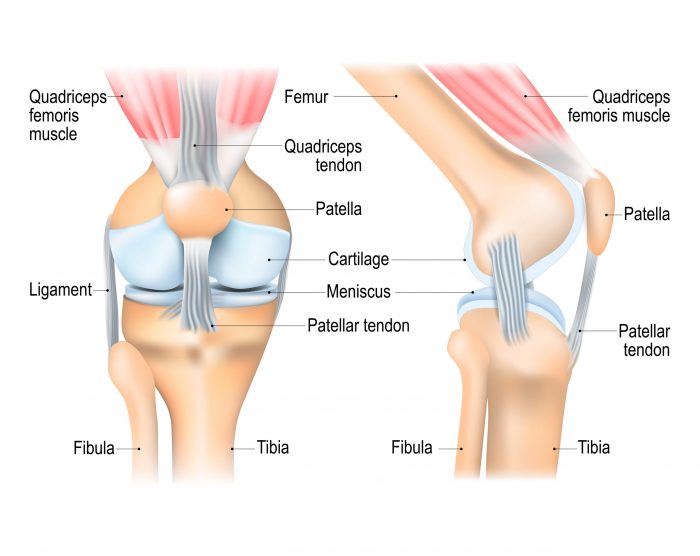
As the largest joint in your body, knees are vital to keeping us moving. Knees are highly complex joints required to take the full weight of your body.
To understand knee injuries, we need to take a quick look at how the knee joint works.
Three bones meet at the knee joint: The end of the femur (thigh), the top of the tibia (shin) and the patella (kneecap). The ends of these bones are covered with cartilage to allow them to move smoothly. There is a layer of thick cartilage, called the meniscus, between your femur and tibia. You also have four ligaments joining the bones, with help from tendons, which join the bones to the muscles in your legs.
What causes knee pain?
Knee pain is usually caused by an injury or ageing or is a symptom of a medical condition.
Anyone can pick up a knee injury, but you’re at higher risk if you’re very active or participate in many sports. Any sports involving repetitive knee-straining work or sudden changes in direction while moving put you at particular risk of injury.
Other risk factors for knee injuries:
- Muscle weakness or imbalance which can destabilise the knee
- Poor flexibility limits the range of motion and increases knee strain
- Excess weight adds stress to the knee joint
- Age leads to cartilage deterioration and susceptibility to injury
What can cause knee pain without injury?
The knee joint is large and complex, but also a vulnerable joint that bears a lot of stress, even from mundane activities. Most of us will experience knee pain at some point, and it doesn’t always stem from a big injury.
All joints and soft tissue have a limit to the amount of activity they can tolerate. This tolerance fluctuates depending on many factors. For example, a period of rest or illness will lower your tolerance, even if you are generally fit and healthy.
Some activities are naturally harder on the knees, such as kneeling, squatting, repetitive stairs, or ladder climbing, or a general increase in your day-to-day activity can spark a painful reaction.
This type of discomfort is usually not something to worry about. With some rest, it will generally ease off in a few days.
More persistent knee pain can signal a problem, whether an overuse injury or a condition like osteoarthritis.
You should see a GP if knee pain doesn’t improve within a few weeks.
It’s important to seek medical help as soon as possible if:
- You cannot move your knee or put any weight on it
- Your knee is very swollen or has changed shape
- Your knee locks or gives way
- You have a high temperature, feel hot and shivery, and have redness or heat around your knee, which could signal an infection.
How do I know what type of knee injury I have?
Many common injuries have overlapping symptoms, making it hard to narrow down what is causing your knee pain. We have collated some common types of knee injuries and conditions with their symptoms in this chart so you can compare them and get on your way to finding relief.
Common signs & symptoms
| Pain | Swelling | Weakness | Stiffness | Instability | Locking | Possible Cause |
|---|---|---|---|---|---|---|
| X | X | X | X | Osteoarthritis | ||
| X | X | X | X | X | Anterior Cruciate Ligament (ACL Injury | |
| X | X | X | X | X | Torn ligament/tendon/meniscus | |
| X | X | X | X | Medial Collateral Ligament (MCL) Injury | ||
| X | X | Bursitis | ||||
| X | X | X | Osgood Schlatter’s Disease | |||
| X | X | X | X | Post ACL Reconstruction | ||
| X | X | X | Patellar Tendinopathy |
Osteoarthritis
Osteoarthritis is a common knee condition and the most common type of arthritis in the UK. Its symptoms tend to develop gradually over time and are caused by wear and tear on the cartilage in the knee joint. As the cartilage wears away, bone rubs against bone, which can cause extreme pain and deformities in severe cases.
Anterior Cruciate Ligament (ACL) Injury
The Anterior Cruciate Ligament (ACL) is one of the main stabilising structures of the knee. It attaches between the femur and tibia and prevents these two bones from moving too much between each other. ACL injuries are common in people who do a lot of sports and are usually caused by twisting on a fixed knee.
Torn ligament/tendon/meniscus
These types of injuries are also caused by twisting on a fixed knee and sometimes come along with more severe ACL injuries. They are usually very painful and leave the knee feeling very unstable. People often describe hearing a popping or snapping sound with this type of injury.
Medial Collateral Ligament (MCL) Injuries
The Medial Collateral Ligament (MCL) runs across the inside of the knee, attaching the femur to the tibia to keep the joint stable and prevent it from collapsing inwards. Injuries to the MCL are most common in sports, usually when people are hit on the outside of the knee. MCL injuries are usually very painful and leave people unable to walk or move their leg.
Bursitis
Bursitis is when the fluid-filled sacs that cushion the joints become painful and swollen. Aside from pain and swelling, you may experience hot, tender skin surrounding the joint that is painful to touch and move.
Osgood Schlatter’s disease
Osgood Schlatter’s disease is most common in active teenagers between 14 and 18 years old. It is swelling and irritation of the growth plate at the top of the shinbone, causing pain and swelling below the kneecap. The pain is usually worse when running and jumping, making it most common in teens participating in high-impact sports. OSD usually goes away when a child stops growing.
Post ACL reconstruction
Severe ACL injuries can require reconstructive surgery with complex rehabilitation. The joint will be much weaker post-surgery, so taking care is important. You may be given crutches or a knee brace to stabilise the joint. You shouldn’t try to put weight on your knee without the crutch or brace until your doctor says it’s okay.
Patellar Tendinopathy
Sometimes known as “jumper’s knee”, patellar tendinopathy is a common soft tissue injury that causes pain in the tendon below the knee cap. It can also cause stiffness and weakness in the knee. Patellar tendinopathy is generally caused by overuse or overload, where the tendon struggles to cope with the pressure and becomes sore.
Find support and relief from knee pain at brace-yourself
Always speak to a licensed professional if you are experiencing knee pain. If you have sought advice and are looking for support for your knee but are unsure where to start, do not hesitate to contact our in-house clinicians via askaclinician@brace-yourself.co.uk. They can offer independent, ethical advice on our products and help you find the right support.
Read next
How to support bunions & best bunion supports to ease pain

Comments are closed here.