
Runner’s Knee & How to Treat It
If you’re a keen runner, you will likely experience some aches and pains at some point on your journey. It’s frustrating when pain holds you back, but runner’s knee is a common condition and can usually be treated with a mix of exercises, taping and knee support to get you back on your regular routes.
In this guide, we answer your questions about runner’s knee and how to treat it, so if you find yourself at a standstill, you know what steps to take to get back on your feet.
Table of contents
What does runner’s knee feel like?
How long does runner’s knee last?
Do knee supports help runner’s knee?
What is runner’s knee?
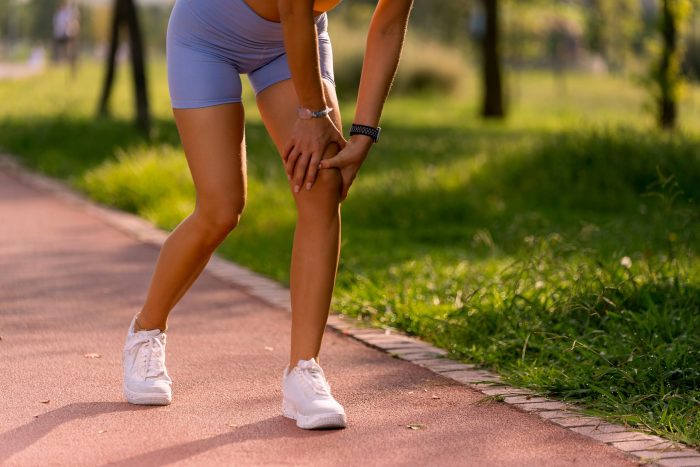
Patellofemoral pain syndrome (PFPS), or runner’s knee, is pain in front of the knee or around the kneecap where the knee connects with the lower end of the thighbone.
Anyone can get runner’s knee, but it tends to be more common in women and people in their twenties and thirties. As the name suggests, it is particularly common in people who run regularly, but it can also occur in individuals who participate in other sports.
What causes runner’s knee?
Runner’s knee has several causes. Overuse, improper training and structural issues with the knee joint are common culprits. Increasing mileage or intensity too quickly is a common cause of runner’s knee, as is not completing a proper warm-up. Other common causes of runner’s knee include:
- Structural defects
- Misalignment of the kneecap
- Excessive training or overuse
- Poor foot support due to incorrect footwear
- Tight Achilles tendons
- Weak thigh muscles
- Injury or trauma to the knee
- Tight hamstrings
- Incorrect form
What does runner’s knee feel like?
Runner’s knee may affect one or both of your knees. Its main symptom is a dull, aching pain in and around the front of your knee or at the back of the kneecap. Runner’s knee pain typically begins gradually and worsens over time.
Other common symptoms include:
- Pain when sitting for a long time with your knees bent. This sometimes comes with feelings of weakness or instability.
- Crackling, crunching, or grinding noises when you bend and straighten the knee.
- Kneecap tender to the touch.
- Pain occurs when performing activities that involve bending the knees, such as going up and down stairs or doing squats.
What can be mistaken for runner’s knee?
Knees are complex joints, and a lot can go wrong with them. Runner’s knee can be mistaken for several other knee conditions, including patellar tendinopathy (jumper’s knee), iliotibial band (IT band) syndrome, and even pain referred from the hip or spine. Conditions like meniscus tears, osteoarthritis and bursitis can also present similarly but require different treatments.
It’s always best to have your injury properly assessed for an accurate diagnosis and treatment.
How long does runner’s knee last?
How long your symptoms last is dependent on the severity of damage to your knee. If you catch it early and start taking action at the first signs of pain, runner’s knee can settle in as little as four to six weeks. However, if the condition has been building under the surface and presents with more severe initial pain, it can take several months to make a full recovery.
Can I run on a runner’s knee?
It’s best to avoid running while dealing with runner’s knee. In many cases, it will be too painful to run with this condition, even if you want to! Pushing through the pain will only make it worse and delay your recovery. It’s important to rest and seek appropriate treatment.
If you want to maintain your cardio while recovering, try swimming or water aerobics to reduce the impact on your knee joint. Only partake in these exercises with guidance from a medical professional.
How to prevent runner’s knee
Runner’s knee is a common injury, affecting over 20% of the population at some point. Fortunately, there are plenty of ways to prevent developing it.
Stretch the muscles around the knees
Every runner knows the importance of warming up properly, but muscles around the knees can sometimes be neglected. Take care to stretch the quadriceps, hamstrings and calves. Try to contract the opposite muscle group to improve your stretch.
Strengthen the core
A strong core is the key to improved mobility. Improving plyometric strength with explosive movements, as well as light weight training between runs, can be very beneficial for injury prevention.
Use hot and cold therapy on sore knees
Hot and cold therapy offers numerous benefits, providing effective relief from acute injuries and pain. Applying a cold compress after a run helps reduce pain and swelling. Heat helps reduce pain and stiffness by increasing blood flow to the affected area. Used together, hot and cold therapy provides effective relief and improves recovery to prevent injuries like runner’s knee.
Rest
Give your knees a break. Running places a lot of impact on the knees, so allowing them to rest is important to keep them healthy. Try incorporating different forms of cardio into your routine that place less strain on your knees. Swimming, rowing, and the elliptical machine are great options.
Stay hydrated
Whether you’re a keen runner or stay active in other ways, hydration is essential for optimal muscle function and health. Hydrate before and after your runs, and carry water for longer outings.
Runner’s knee treatment
Treatment for runner’s knee depends on several factors: symptoms, age, general health and the severity of your condition.
We know you don’t want to hear it, but the best initial course of action is to stop running. Trying to push through the pain will only make it worse and potentially lead to long-term damage.
Always seek guidance from a medical professional if you have symptoms of a runner’s knee. They can put together a proper treatment plan that will usually consist of the following:
- RICE protocol – rest, ice, compression, and elevation.
- Strengthening and stretching exercises.
- Anti-inflammatory medicines like ibuprofen.
- Taping.
- A knee brace or support.
How to tape for runner’s knee
Kinesiology tape is a common method for relieving runner’s knee symptoms and other issues with the patella. Kinesiology tape can help offload the painful area, providing relief from pain and helping you get back on your feet.
It’s essential to consult a medical professional before using kinesiology tape for runner’s knee symptoms.
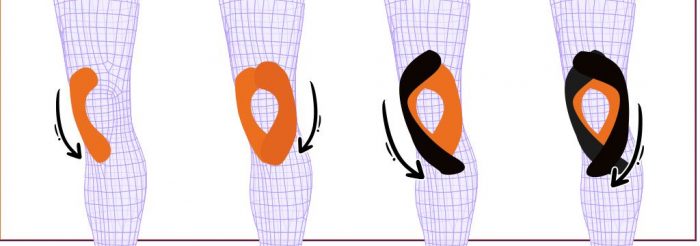
Step 1: Cut four sections of tape – two 15cm long and two 20cm long.
Step 2: Sit with a slight bend in your knee and apply the first 15cm of tape to the inside of your knee. The midsection of the tape should be under full stretch, curving around the kneecap. Apply the “anchor” ends without stretching.
Step 3: Repeat this process with the other 15cm tape on the outside of the knee, curving around the kneecap.
Step 4: Apply the first 20cm tape under full stretch to the inside of the knee, overlapping it partly with the first tape.
Step 5: Repeat on the other side.
Kinesiology tape is a great drug-free pain reliever for various injuries and conditions. Explore in more detail in our guide.
Do knee supports help runner’s knee?
Knee supports and braces can be beneficial if you’re struggling with runner’s knee. They can help reduce pain, provide stability and support. However, they will not solve the underlying problem and should be used in conjunction with treatment as recommended by your medical professional.
It’s important to choose the correct support when dealing with runner’s knee, as there are many different options available. For runner’s knee, a brace with patella support is recommended as it helps stabilise the kneecap.

Bauerfeind’s Sports Knee Support is great for runner’s knee as it stabilises the kneecap while allowing freedom of movement. An anatomically contoured pad surrounds the kneecap, providing compression and massage to the connective tissue and muscles. The surrounding stabilising muscles are activated more quickly to improve joint coordination and boost recovery.
Target knee pain with brace-yourself
At brace-yourself, we have a selection of premium knee braces and supports from leading brand Bauerfeind to help you recover from various knee injuries and conditions. Whether it’s runner’s knee holding you back or another common injury, our collection is designed to help get you moving again. Discover the range today, or check out our Complete Guide to Knee Injuries for further guidance.

Comments are closed here.