
What is Focal Vibration Therapy & How it Helps Ease Pain
There is nothing worse than pain stopping you from doing what you love. Whether that’s a sport, your favourite workout or even going about your day, being in pain from an injury can be disheartening. While traditional routes like rest, ice, heat and painkillers can provide short-term relief, you need to target the source of pain to treat it correctly. That is where focal vibration therapy (FVT) comes in.
Contents
What is focal vibration therapy?
How does focal vibration therapy work?
What does vibration therapy do for the body?
What is focal vibration therapy?
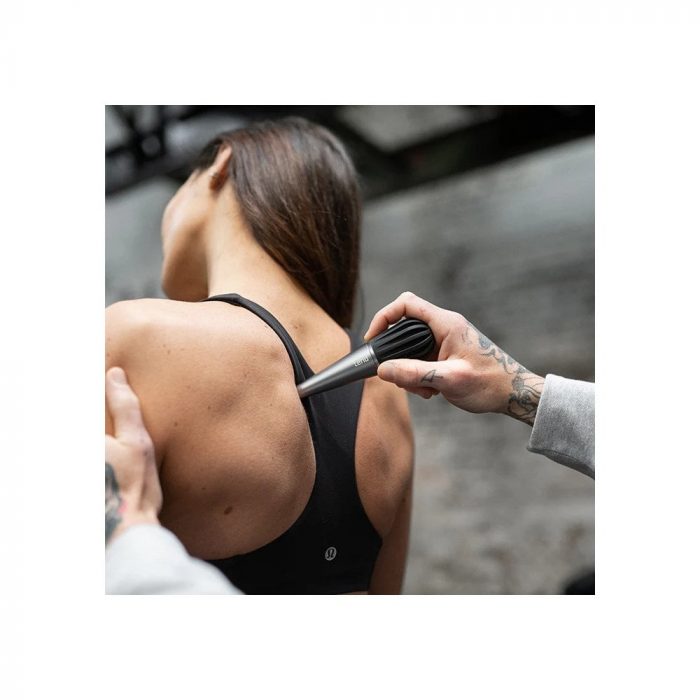
Focal vibration therapy is a rehabilitation method that stimulates the body and encourages healing and recovery.
The idea of using vibration in recovery first emerged in 1867. Russian physician and inventor Gustav Zander developed an apparatus using weights and pulleys to create vibration. In 1895, Dr. John Harvey Kellogg implemented vibration therapy using a similar setup in his practice. He developed a vibrating chair, claiming it could improve circulation and alleviate constipation in his patients.
During the Russian space program, experts found that astronauts experienced bone loss and fractures at an accelerated rate. Doctors began using vibration therapy to strengthen the astronaut’s bones and muscles.
In time, the therapy was made available to the public and has evolved ever since.
How does focal vibration therapy work?
Focal vibration therapy works by stimulating the endings in the muscle spindles. These tiny stretch receptors signal the length and changes in the length of muscles to the brain. Using this information, the brain calculates muscle position and movement to control how you move, relax, and adjust positions.
Unlike massage guns, FVT sends more precise vibrations directly into the troublesome tissues to stimulate healing. It increases blood flow, reduces inflammation and promotes long-term recovery without the aggressiveness of some massage guns.
FVT has proved effective in the treatment of various conditions, including:
Arthritis: Helping to manage joint pain and stiffness
Tendinitis and RSI: Speeding up recovery from overuse injuries
Plantar Fasciitis: Restoring mobility and soothing heel pain
Ligament pain: Aids recovery without limiting movement
Rotator cuff injuries: Helps loosen stiff, painful injuries
With so many proven benefits to focal vibration therapy, brace-yourself is pleased to offer TEND – a brand specialising in FVT to help people recover faster and return to their usual selves.

A bit about TEND
TEND was founded by Will Ranscombe, an avid skier and cyclist who knows firsthand the frustrations of knee issues, body aches, and tendon pain. While searching the health and wellness recovery market, he realised there were few options for a product that could effectively target multiple areas of the body—especially tendons. Most recovery tools were either designed for a single muscle group, were bulky and expensive, or weren’t practical for at-home use.
Will saw an opportunity and partnered with award-winning industrial designer Rob Scott to create TEND Deep, an FVT device that is lightweight and easy to use for managing pain from various injuries and conditions.
What does vibration therapy do for the body?
Vibration therapy has multiple benefits for the body, helping to improve circulation, muscle strength, flexibility, bone density and increasing recovery rate.
Targeted vibration therapy has produced incredible results for users, from professional athletes to everyday people who want to exercise without discomfort.
Case Study: Sam
Balance isn’t just about staying upright—it’s about control, precision, and resilience. And for elite athletes like GB Olympic windsurfer Sam Sills, even the smallest setbacks can disrupt performance.
Sam turned to TEND to support his recovery, reduce muscle tension, and improve neuromuscular control.
As a professional windsurfer, Sam relies on his balance, reaction time, and muscle coordination to maintain peak performance on the water. After noticing stiffness and muscular fatigue affecting his movement, he knew he needed a solution to enhance recovery without compromising training.
TEND’s targeted vibration therapy stimulates blood flow and relaxes overworked muscles, allowing for deep, effective recovery. By integrating FVT into his routine, Sam regained mobility and maintained peak performance—without skipping training.
Case Study: Francesca
“Exercise has always been my escape. Between work, kids, and life in general, it’s the one time I can focus on me. Whether it’s a gym class, a morning run, or just a quick home workout, moving keeps my head clear. But a few months ago, I started noticing this dull ache in my knee. Nothing dramatic, but enough to make lunges and squats feel wrong. And then one day, during a workout, I felt a sharp pain—like my knee just wasn’t having it anymore.”
After trying the “usual” fixes like rest and ice for a few weeks, Francesca tried to return to her workout routine, but her pain flared up again. Exercise isn’t just important to her physically, but helps her mental wellbeing too. Francesca didn’t want to ignore the pain or make it worse, but she didn’t want to stop moving either.
“A friend recommended TEND, and honestly, it’s been a lifesaver. I was sceptical at first (I’d already tried so many things), but within a few uses, my knee felt looser, and less stiff. Instead of feeling like I was constantly on the edge of re-injury, I could move without hesitation. After a few weeks? No more worrying about my knee mid-workout.”
“For any busy mum, runner, lifter, or anyone who needs exercise for their mental health, this thing is brilliant. It let me keep moving while actually recovering—and that made all the difference.”
FVT offers effective treatment and relief for pain. Discover more options within our full range of massage balls and rollers at brace-yourself and find excellent options for self-care and rehabilitation.
Read next
How to support bunions & best bunion supports to ease pain

Comments are closed here.