
A Complete Guide to Plantar Fasciitis
Plantar fasciitis is a painful condition that can stop you in your tracks. According to the NHS, plantar fasciitis affects around 1 in 10 people. It’s a common complaint that can usually be managed with rest and at-home treatments. In this guide, we take a detailed look at this condition, from its causes to treatment options, to help you get back to your regular self.
Table of contents
What causes plantar fasciitis?
What does plantar fasciitis feel like?
Can plantar fasciitis cause leg pain?
How to tape for plantar fasciitis
What is shockwave therapy for plantar fasciitis?

What is plantar fasciitis?
Plantar fasciitis is a condition that causes pain on the bottom of the foot. It happens when the plantar fascia, a tough, fibrous band of tissue that runs across the sole, becomes inflamed. The plantar fascia attaches the heel bone to the base of the toes, helping support the arch of the foot and support movement while walking.
What causes plantar fasciitis?
Inflammation of the plantar fascia can be caused by:
- An increase in activity, such as starting a running program.
- The type of shoes you’re wearing, especially if they have poor arch support or cushioning.
- Tight calf muscles or the Achilles tendon can affect the way you walk and put stress on the plantar fascia.
Several factors can increase your risk of developing plantar fasciitis:
- Age: Plantar fasciitis is most common in people between the ages of 40 and 60.
- Exercise type: Activities that put a lot of pressure through the heel, like running, ballet, and aerobics.
- Foot mechanics: Flat feet or high arches can affect the distribution of weight through the foot, putting added stress on the plantar fascia.
- Occupation: Jobs where you’re on your feet most of the time, walking or standing on hard surfaces, can increase the risk of developing plantar fasciitis.
What does plantar fasciitis feel like?
Plantar fasciitis feels like a sharp or stabbing pain in the bottom of the foot, especially near the heel. “First-step” pain is a common complaint with this condition. It is usually a telltale sign of plantar fasciitis, where the initial steps after waking up or a long period of sitting are most painful. Other symptoms include heel and arch pain that worsens with activity, the heel feeling tender to the touch and a stiff feeling in the feet. The pain typically lessens once you start moving around, but can return after extended activity.
Diagnosing plantar fasciitis
It’s important to seek a proper diagnosis for plantar fasciitis so it can be treated correctly. A GP, physiotherapist or podiatrist will be able to diagnose plantar fasciitis. They will usually be able to diagnose it based on your symptoms and a physical exam of the foot.
Generally, they will feel and press different areas of the foot to check where the pain is. They might gently lift the big toe, get you to move your foot up and down, walk around or stand on your toes to gauge your response and discomfort.
Usually, imaging tests aren’t required unless there’s any doubt that plantar fasciitis is the cause or your medical professional wants to rule out any other potential causes. In which case, they might recommend an X-ray, MRI or ultrasound.
Can plantar fasciitis cause leg pain?
Yes, plantar fasciitis can cause pain in other parts of the leg. The nerve pain at the calcaneus branches (the nerves and arteries that supply the heel bone) can radiate back up the nerve track in the leg, causing pain in the calf and ankle.
Also, people suffering from plantar fasciitis tend to adjust their gait and stance to avoid the painful area. This unnatural movement puts extra strain on the calf muscles and tendons in the lower leg, which causes pain. The pain can even radiate up into the hips and back. It’s important to seek treatment for plantar fasciitis before the pain starts to travel, as it can be much harder to deal with at this point.
Depending on the severity of your symptoms, they may recommend that you manage them at home with self-help measures or refer you to a physiotherapist for further treatment.
How to ease plantar fasciitis
Mild cases of plantar fasciitis can usually be relieved with at-home treatment and rest. Initially, try to rest your foot as much as possible. Avoid prolonged periods of standing or walking, and limit activities that exacerbate the pain.
Other at-home treatments include:
- Applying ice to the painful area for up to 20 minutes, two or three times a day.
- Wear shoes with good support and cushioned heels. Avoid flip-flops, high heels, and backless shoes, and avoid walking around barefoot.
- Over-the-counter painkillers like paracetamol and ibuprofen can help manage pain.
- Gentle exercises to stretch the plantar fascia, calf muscles and Achilles tendon.
Further treatment for plantar fasciitis
More treatment options for plantar fasciitis include wearing insoles or orthotics to support the arch and heel, corticosteroid injections to reduce inflammation, and exercises to help stretch the plantar fascia and Achilles tendon.
Here are a few stretches recommended for plantar fasciitis:
Calf stretches
- Place your hands against a wall or solid surface so your arms are out straight.
- Place one foot in front of you and the other behind you.
- Gently bend your front knee while keeping the back leg straight.
- Repeat two or three times, holding the stretch for around 20 seconds each time.
- Switch legs and repeat.
Relieve tension
For this stretch, you will need a small towel.
- Sit on a chair, fold the towel lengthways.
- Lift the affected foot off the ground and loop the towel underneath the arch, holding one end of the towel with each hand.
- Gently pull the towel towards you while flexing your foot. Hold the stretch for around 15 to 30 seconds.
Facia release
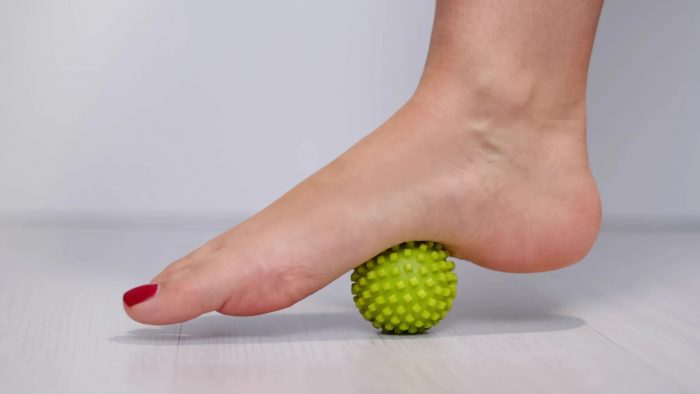
Fascia release is an effective way to relieve plantar fasciitis symptoms. By rolling a fascia release ball under the affected foot, you stretch the tight band of tissue while easing tension, improving circulation and reducing inflammation.
- Find a comfortable seat and place your fascia release ball on the floor.
- Place your bare foot on the ball and gently apply pressure to the ball with your foot.
- Roll the ball slowly backwards and forward, or in small circles from your heel to the ball of the foot.
- Continue for a few minutes or until the tension eases. Repeat three or four times a day.
Be careful not to press so hard that it makes the pain worse.
How to tape for plantar fasciitis
Kinesiology tape can be used as a preventative measure or during recovery from plantar fasciitis. If you are currently struggling with plantar fasciitis, taping is more effective when used in combination with other treatment methods like the ones we’ve discussed so far.
To tape for plantar fasciitis:
- Start by taping around the ball of the foot.
- Next, wrap a piece of tape around the back of the heel and attach it to the tape around the ball of the foot.
- Place a strip diagonally from one side of the ball of the foot, across the midsection and around the opposite side of the heel. Wrap it around the heel, then do the same in reverse, taking the tape diagonally across the midsection and ending on the opposite side to where you started.
- Repeat the above three times to ensure it will hold and support the foot properly.
- Apply several strips horizontally across the foot to cover the previous strips.
- When you’re finished, the foot should be almost entirely covered from the ball to the heel to allow the necessary support for the plantar fascia to rest.

What is shockwave therapy for plantar fasciitis?
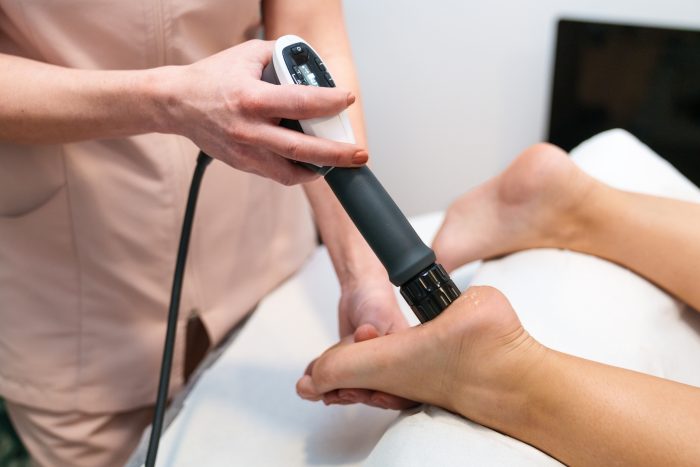
For more persistent cases of plantar fasciitis, another treatment option is Extracorporeal Shockwave Therapy (ESWT). This non-invasive procedure uses sound waves to stimulate healing.
The sound waves are applied to the surface of the skin through a probe. The waves spread outward through the tissues, increasing blood flow and promoting the healing process.
Find relief for common injuries and conditions at brace-yourself
At brace-yourself, we have a fantastic collection of products from leading manufacturers that can help your recovery from common injuries and conditions. Whether you are looking for medical supports, sports supports or fitness and rehabilitation products, we are here to help. Whether it’s plantar fasciitis that’s holding you back or something else, our range is designed to help you get back to your usual self.

Comments are closed here.